Sunday, October 24, 2021

The Night Sky

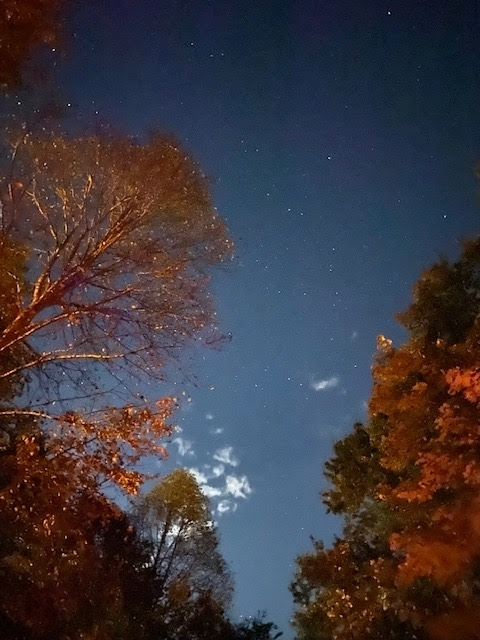
 The sky, of course, has served as inspiration for so many things.  The night, too.  What can you really see when you take the time to look up?

It’s a fascinating subject to write about the moon, the stars, the sky, the night, and see what you come up with when you do.  If you’re using the sky in a poem or story, how do you use it?  

It stands to reason the sky does look different depending on the weather and your location.  Time, would play a factor, too.

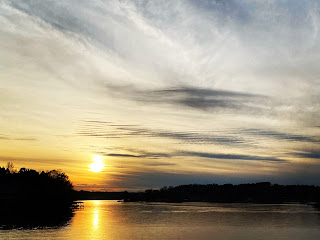
The night sky is a constant and sometimes that’s needed in a work as well.  These are my pictures from last night.  There was a full moon!  It was definitely a glorious sight.  


Sunday, October 17, 2021

When Poetry becomes Art

I was honored to have my poem selected recently as part of an outdoor art installation entitled “Of Earth and Sky.”  It’s currently on display outdoors in Charlotte, NC.  The art project used parts of each poet’s poem in the art.  My part of my poem is at Marshall park in downtown.  It’s white letters on stakes.  Another piece of a poem by another poet is nearby and it’s painted in the grass.  This park is idyllic with it’s reflecting pools, fountain, and curvy walkways amongst the trees.  It’s quite busy.  The day I was there, a model was being photographed, a wedding party arrived in a stretch limo, and there was a group having a picnic.  Plus, there were people exercising and/or walking their dogs.  It’s a popular place!

How different it is to see your words larger than life and outside in a park!  It completely changes one’s perspective on reading and/or viewing the poem.  It’s one thing to read a poem in a book, online or on paper.  It’s quite another to see it on display like an advertisement billboard.

My favorite poet Ted Kooser participated in an E-book of pictures of an artist with Kooser writing poems to go with.  It was really quite inventive.  At the end of the book Mr. Kooser and the artist had videos explaining their creative processes.  

All the arts, in my opinion, go together and complement each other.  I know I learned a great deal about writing dialogue in grad school for Theatre/Communications/Speech. 

A few years ago, I also participated in an art showing of paintings and photos with poems to go with.  That was an interesting experience for me to write a poem to go along with the art.  At my local Arts Council, an exhibit just finished and some of the photos used words as part of the art if not the entire piece.

I love to read words and learn new words!  To me, words are Art.  What kind of art will you create today?

Sunday, October 10, 2021

Organic Writing

Organic.  It’s a word that’s tossed about a lot!  But what is it, when it’s applied to your writing?

I know I write that way.  I don’t tend to plot out in detailed outlines, or paste sticky notes all over the wall to work out my stories, books, or poems.  I like to get the idea, and piece it together as I go along.

You might think, well how does that work out for you very well?  It does mean I might begin to write pages, or verses and then have to go back and review to make sure it all goes together.  I like to edit as I write as well - a big no-no for most writers, but it’s the way I’m used to writing and how I’ve been doing it since middle school aka junior high.  

I do take notes when I write.  A lot of times I doodle!  I do imagine where my characters are, what they are doing.  And,  I do sketch out general ideas, and a few plot points here and there depending on what kind of story I’m writing.  I like to let ideas sift and gel in my head, too, and then get them down on paper.  I have some very strange voice memos in my phone, if you know what I mean.

To me, writing organically means that it’s all fresh.  It’s real.  Oftentimes, I will observe or overhear something I need for my poems or stories and I use it.  Once in a while, if I get stuck a lot of times someone tells me a story or I read something that makes me figure out where I need to go next with my work.

I believe that organic writing gives you that sense of real that makes a story or poem memorable, readable, relatable, and more.  So how do you like to write?


Sunday, September 19, 2021

Poetry Pen Pals

Have you ever had a Pen Pal?  If you don’t know what that is, people actually used to write and exchange letters with one another whether they knew them or not.  You could find someone to write to in advertisements in magazines or newspapers.  Or, perhaps you did stay in contact this way with someone you actually knew.  I used to write letters to my Grandmother and some friends I had in Germany at one time.  I lost touch with the friends and my Grandmother passed away many years ago.

Now, we can stay in touch with social media, emails, texts and yes even letters!  Over the years, I have critiqued and reviewed the works of many poets with my Poetry Critique Service.  I also published a monthly free ezine, The Poetry Market Ezine, for 20 years specifically offering poetry resources just for poets.  I have made the acquaintances of a few poets this way keeping in touch with them not with letters but usually via email and sometimes even mail which usually involves exchanging poetry books and the like.

Of course as a Poet you should read the other works of other poets.  Usually that’s going to include classic poets and the contemporary famous poets.  But, you should also read work of your contemporaries.  And by that, I mean fellow poets publishing in the same magazines you are or simply publishing elsewhere.  It truly will give your own work a new perspective.  I also enjoy finding out what my poet friends are working on and/or reading.  It’s quite inspirational and also fun to chat or email with them about it all as well.

Next time you are looking for poems to read, why not try reading the works or touching base with a poet whose name you recognize or maybe one who has published your own work.  Or, if you read a poem you like by a fellow poet, shoot them an email and let them know your thoughts.  

It’s a super way to connect through poetry.  Plus, Poets supporting Poets simply means that poetry will stay alive and carry on!


Sunday, August 8, 2021

Ah, Inspiration!

I am a big believer in inspiration.  I have always subscribed to the philosophy of learning by doing.  Same, with being inspired to write a poem or story.  

I never quite know when an idea might strike!  I have to tell you I have some rather odd memos in my phone.  

The other day I was in a bank checking something and they left me alone for a while to get a key and because the service was s l o w all I could do was look around and imagine all the possibilities for this, that or the other happening in a story or maybe poem set there.  I refrained from taking pictures or a memo while there because how might that look?  Being in a new setting can really get your writing juices going.

With inspiring thoughts, it’s better if I get struck by one during the day or at least when I’m awake.  I do keep pen and paper nearby if I need to jot something down in the dark.  I have done that before and most of the time I can translate my handwriting at night.  

When the moment comes, I will write on wrappers, scrap paper, napkins if I can’t get to my phone depending on where I am.  Sometimes, you can’t have your phone with you, etc.

An inspired piece to me has such a better flow than something that is forced.  What experiences have inspired you lately?

Sunday, August 1, 2021

Read to Write

 If you’re a writer/poet, do you also like to read?  I do!  I read all the time.  I read books, e-books, articles, newspapers, magazines, practically anything I can get my hands on.  I enjoy going to book stores and wandering around!  I enjoy finding books for sale in boutique stores or even used book stores.  What fun!  It’s even more fun, to discover a book I really want to read.

I read a variety of types of writing:  non-fiction, biographies, mysteries, thrillers, adventure, sci fi, fantasy, and poetry.  Besides liking to read, I find that reading all these different things helps me to be a better writer/poet.

I can’t imagine trying to be a writer/poet and never reading anyone else’s works.  I can imagine you not reading something similar to your own so you don’t inadvertently get lost in their storyline instead of your own.

Reading makes me a better writer and poet.  If I read something written in a new way (for me) that gives me permission, so to speak, to write that way, too.  You can also learn technique this way - it’s great for people like me who like to learn by doing and not by reading endless textbooks, attending endless classes or taking endless tests (I’ve done all of it for College and Grad school and didn’t particularly like any of it especially if it had to do with Math!).  

It’s so easy to obtain materials to read:  online, library, thrift store or from sharing books with friends.  What kinds of books do you like to read?  How does reading make you a better writer/poet?

Sunday, July 25, 2021

Your Poem Editing Process

 Okay, so you’ve written a poem.  So, what’s next?  Do you immediately type it up and mail it out or upload it for submission?  Or do you take it to a writers group for feedback?  Do you print it out and frame it on your wall, or give it to someone as a gift?  Once the poem is written, what exactly do you do with it?

For me, unless I’ve written a poem for hire or I’ve written it to enter in a contest or to meet a publication deadline, I let it sit.  Yes, sit!  It sits in my notebook if it’s hand written or it sits on my computer if I typed it.  I then move on to something else.  

It may be months or even years before I get back to that particular poem again.  Yes, really!  I suppose I love to write (almost as much as I like to swim) so I write a lot.  Once I get back to the poem again, that’s when I edit it for typos, subject, line spaces, line breaks, word count, form, style and so on.  I dissect it, I suppose, at that point.  After that, I polish it up and then and only then is it ready to send out into the world if I find a place where I want to send it or a book I want to include it in.

There really is a process to writing poems.  It’s more than just jotting lines down on a napkin or memorizing verses!

How do you work up your poems?  What’s your poetry editing process?

Sunday, July 11, 2021

Poetry on the Road

Do you travel?  Go places?  Run errands?  

I find I enjoy reading and writing poetry on the road, or on the go.  If you write place poems, you can certainly gain from being out and about for ideas, etc.  And traveling or moving about is a great way to find time to read poetry, or whatever else you like to read.

Poetry on the Road, to me, is like carrying around that battered book of poems you simply cannot leave home without and reading a few lines, verses, or pages as you travel.  Or it is like carrying that device, notebook, however you write, with you so you can jot down your thoughts, ideas, and turn them into a poem, or two or three.

It could also be if you attend open mics, or attend literary festivals, book fairs, or other art events.  You can take your poetry “act” on the road so to speak.

What do you take with you on the road or even around town?  What do you write as you move about your day or week?

Go ahead and get out there and take your poetry on the road!

Monday, July 5, 2021

Acting Can Make Your Character Writing Better: Live Your Writing, Dream Your Poems

 When I went to acting school in Washington DC I was taught there are two kinds of acting - technique or method.  My school employed technique but we did study method as well.

Later on, I went to Graduate school and earned my degree in Theatre and Communications.  I always preferred writing over acting.  Studying acting, participating in plays and even writing them helps me now with character dialogue.

I always found that experiences helped me with acting.  It also helps with writing.  

Yes, you can research things you write about and never go and do them, etc.  But, how much more real is your writing if you are able to actually do some of the things, go to some of the places your characters do, within reason, of course.  I think it adds that terrifically special element into your works.  

For instance, I wrote an award nominated mystery series (The Glass River and A Sunless Sea) that each time included local history and real places in the community where I live.  People were excited to have been to the places in the books.  In “A Sunless Sea,” I went up the mountain, Hibriten Mountain, where it is mostly set and that way I could include very real details in my story.  I know that what I learned in Acting has been beneficial to the way I write!

Whatever I do during each day, whatever I get to do, I’m always trying to pay attention to specific details (the man in the tank top, with round holes in his ears filled with green rings, his companion a preppy dressed lady in a fancy designer coat) and I make note of them for later use.  I read a lot, watch a tiny bit of TV, and I pay attention in conversations or around me to absorb all these goings on.  As a result, if I fall deeply asleep I often have very vivid dreams.  My dreams could be movies, I sometimes say and laugh about later.

Take aways from them often help me get through a stuck plot point or give me an idea for a poem. You can dream your way into a good poem, ask my favorite poet Samuel Taylor Coleridge!

Have an adventure when you write!  And pay close attention to your dreams … a special verse may await you!


Sunday, June 27, 2021

Writers Gonna Write, Poets Got Poetry

Have you ever heard a Writer or Poet or maybe a Teacher say something about the volume of another author’s work and perhaps mention the lack of their own works in the same sentence?  You know it’s the Quality vs Quantity argument.  And of course it does make sense in most everything.  However, if you are living your life as a Writer or Poet along the lines of say Rainer Maria Rilke’s “Letters to a Young Poet” where you cannot live pretty much if you cannot write, then are you not writing most every day anyway?  And if you are writing every day, what are you doing with your works?

For a long time, years probably, I ran a few of my own zines and such and I would have a few things published here or there.  I would write mostly on the weekends.  Later on, I shifted to writing most evenings and on Saturdays, sometimes on Sundays.  I feel better if I write, and I do have something to say and loads of ideas.  It depends, though, how often and how much I write at a time.  

When I started getting into place poetry, I wrote quite a few chapbooks of poems.  The poems simply flowed.  I write more poems than fiction.  I write non-fiction, too.  I do take time to Edit and Revise most everything multiple times.  Sometimes, my works sit for years before I actually do anything with them beyond editing.  So as it stands, once I achieved a level of writing I was comfortable with I began to get more and more things published, without submitting as much. (I did go to Graduate school for Theater & Playwriting, Speech, and Communications.)

I do write to be read.  I don’t write to take the work and leave it hidden on my computer.  I can do that with my journaling if that’s what I choose to do.  

So if you are any of the words bandied about so often and not necessarily in a nice way:  well-published and/or prolific, does that make you any less of a Writer or Poet than someone who maybe writes one story a year, one or two poems a year, and so on?  It can go the same way in reverse, are you any less of a Writer or Poet because you don’t write very much or it takes you a long time to complete something?

Walt Whitman kept on writing on his book “Leaves of Grass” adding and adding to it until he could not.  You can read it in the Deathbed edition.  It took me two years to read it all.  

How you write is up to you.  How much you write is also up to you.  If you want to share said writings with the world, also up to you.  

My thinking is this:  Write Without Ceasing!  It is the writer’s way.  (You can find a home later for your work, if you so choose!)  


Sunday, June 6, 2021

The Tools for Writing

What is in your writer’s tool box?  You do have one, right?

You don’t literally have to have a tool or tackle box for this, but then again you always could.  It depends on if you write full time while on the go, or maybe you write only at home or at a desk or you rent studio space (or maybe you simply utilize a table at your favorite coffee or dining spot.)

It’s probably good if you have a routine of sorts when writing, so that you know exactly what you need to do so.  Also, a certain time of day or days when you plan to write would also help.

Here is the ideal writing tools I’d have (or have) when writing at home or on the road:

1) flat surface like a desk

2) pen and paper

3) notebook

4) small note book

5) scrap paper

6) self-stick notes

7) tablet

8) laptop, smart phone

9)Thesaurus 

10) paper clips, envelopes, stamps

11) stapler, stapler remover, staples

12) self-address stamp with ink

13) printer

14) blue light glasses

15) back scratcher


That’s pretty much it!  Of course you can see I use a mixture of off computer means to write as well as on computer.  I prefer to submit by email or online these days but some places still prefer mail.  To me, being a writer means you need to be versatile in your work, and of course to always be prepared to get that idea down by any means possible so you don’t forget it!


Artemis at Sunset

As this year begins to come to a close, I thought about one of my favorite things to do: watching sunsets.  While I am often up early enough...